LP Exchange vs Letproperty for Sell Tenanted Properties Directly To Other Investors
You are selling a tenanted property and weighing LP Exchange against Let Property for a direct investor sale. The choice affects your sale speed, buyer pool, and the paperwork burden you carry. Both platforms claim to serve this exact scenario, so the practical differences matter more than the marketing.
By the end of this article, you will know how each platform handles pre-listing verification, which one gives you broader buyer access, and where transaction certainty actually stands. You will also see a direct pricing comparison and a clear recommendation for your situation, drawn from the full feature breakdown and final verdict sections.
Quick Verdict: LP Exchange vs Let Property for Selling Tenanted Properties to Investors
In this comparison, we'll quickly break down the key differences between LP Exchange and Let Property to help you decide which platform best fits your needs for selling tenanted properties to investors. Both platforms aim to connect property sellers with buyers who want income-producing assets, but they go about it in different ways.
Let Property operates as a UK-focused marketplace where every property is pre-checked and verified, with essential reports provided upfront. This means sellers can present a credible, investor-ready package from day one, and buyers can move forward with confidence. The platform works on a fair first-come, first-served basis, where the first to pay the buyer's premium secures the deal. That model rewards speed and decisiveness, which suits investors who know what they want.
LP Exchange, by contrast, appears to offer a property exchange platform with its own approach to listing and matching buyers. Details on its verification process and buyer vetting are less clearly defined in public materials, so sellers may need to do more of their own due diligence. Its reach and tools may vary, and it may not offer the same level of pre-sale preparation that Let Property provides.
Here is a quick look at the core differences:
- Verification: Let Property pre-checks every property and supplies essential reports upfront. LP Exchange's verification standards are not clearly detailed.
- Buyer process: Let Property uses a transparent first-come, first-served model. LP Exchange's buyer selection process may differ.
- Market focus: Let Property centres on the UK investor market. LP Exchange may have a broader or different geographic focus.
- Income continuity: Let Property lists properties with tenants already in place for immediate income. LP Exchange may or may not prioritise tenanted listings.
Your choice ultimately hinges on what matters most to you. If you value speed and transparency, Let Property's verified listings and clear buying process are hard to beat. If you want a platform with a different structural approach, LP Exchange might be worth exploring, though its feature set is less well documented.
For most UK-based property investors looking to sell tenanted properties directly to other investors, Let Property is the stronger recommendation. Its verified listings, dedicated investor network, and focus on tenant-in-situ sales make it a dependable choice. LP Exchange may suit those who want to compare platform approaches, but Let Property offers the clarity and preparation that a smooth investor-to-investor sale demands.
At a glance: how Let Property compares to LP Exchange on the features that matter most.
| Feature | Let Property | LP Exchange |
|---|---|---|
| Sell Tenanted Properties Directly To Other Investors | ✓ | ✓ |
What Is Let Property?
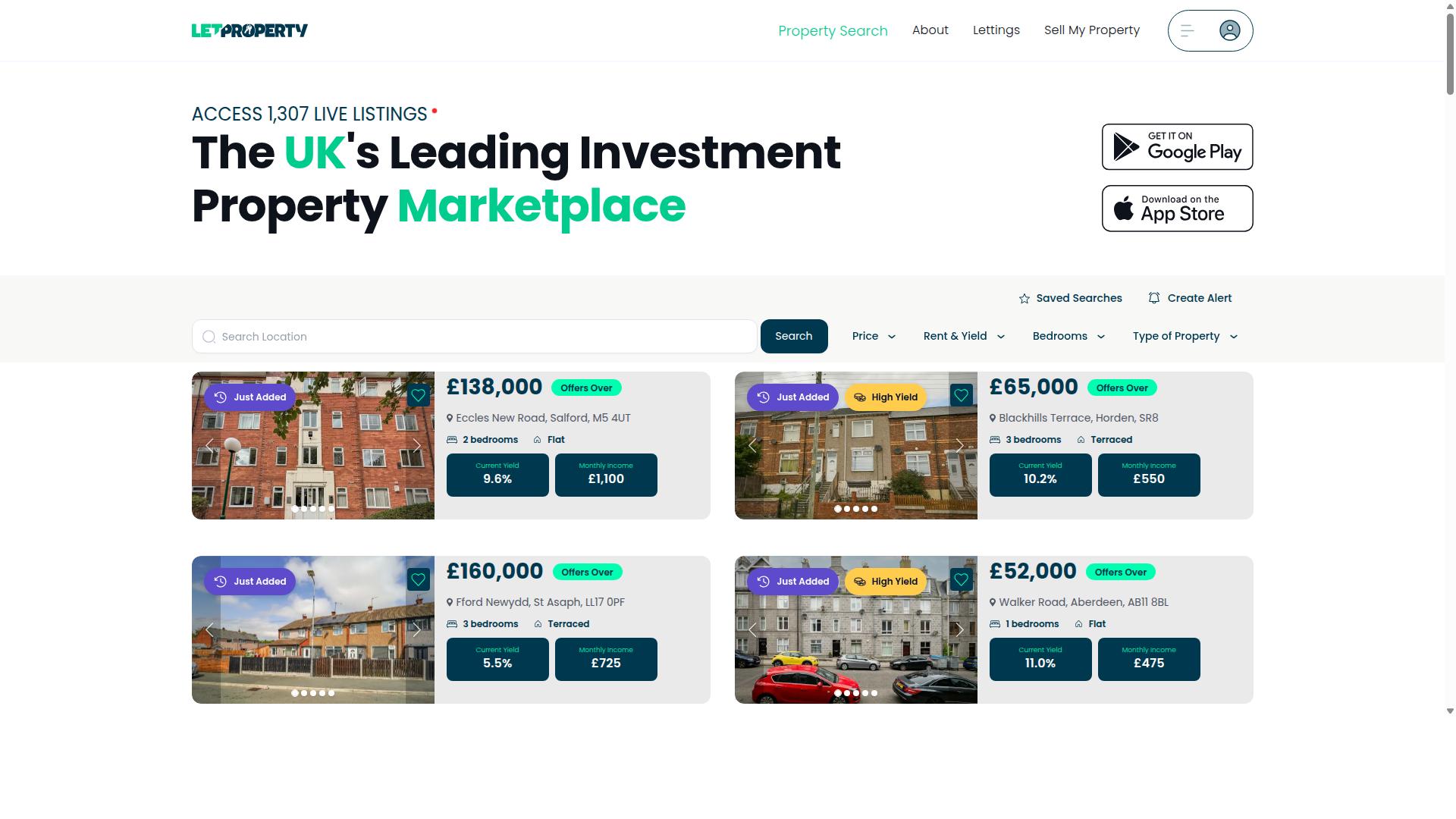
Let Property is the UK's Leading Investment Property Marketplace, designed to connect retiring investors with buyers seeking tenanted properties for monthly cashflow. The platform focuses exclusively on investment properties with tenants in situ, so buyers can step into an income-generating asset from day one.
Its mission is to transform a stagnant industry by helping retiring investors generate monthly cashflow through tenanted property investments. The goal is straightforward: make buying and selling investment properties as easy as trading stocks.
Every property listed on the platform undergoes industry-leading Pre-Checks. This means all buyers receive the same essential reports and information upfront, removing much of the guesswork from the due diligence process.
Properties are offered on a fair first-come, first-served basis. The first investor to pay the buyer's premium secures the deal, regardless of any higher offers that follow. This creates a transparent and predictable buying process.
The marketplace covers a range of property types across the UK, from single buy-to-let units to larger portfolios. It serves both seasoned property investors and landlords looking to expand or restructure their holdings through a direct property sale.
For sellers, the platform offers a route to property liquidity without the delays of a traditional open-market sale. For buyers, it provides access to pre-vetted, tenanted investments where rental income continuity is already established.
What Is LP Exchange?
LP Exchange is a property exchange platform that facilitates investor-to-investor sales, but details about its specific operations are limited. It appears to be designed for those looking to sell tenanted properties directly to other property investors, rather than through traditional estate agency routes.
The platform likely focuses on the concept of a tenant in situ transaction, where the buyer takes over the property with the sitting tenant still in place. This approach can appeal to investors seeking rental income continuity from day one, as they avoid the void period that often follows a vacant possession sale.
However, LP Exchange does not publicly detail its exact mechanisms. Information regarding its fee structure, the size of its investor network, or how it handles the property transfer process is not clearly documented in public sources. Potential users should research LP Exchange directly to understand its current listing process and any eligibility requirements.
For property investors, the appeal of such an exchange lies in property liquidity. A dedicated platform for investor-to-investor sales can shorten the time it takes to exit a buy-to-let asset, especially when compared to marketing to first-time buyers who require mortgages and may be deterred by an occupied property.
Features Compared
This section compares the core features of Let Property and LP Exchange that matter most to sellers of tenanted properties.
When you sell a property with a tenant in situ, the buyer is taking on more than bricks and mortar. They are inheriting a lease, a rental income stream, and a legal relationship with a sitting tenant. That makes the sales process different from a standard vacant possession transaction.
Both platforms aim to connect you with property investors, but they take different approaches. The key differences lie in three areas: how properties are vetted before listing, how many buyers can see your listing, and how quickly a sale can complete.
Let Property operates with verified data points and a structured process. LP Exchange is described more generally across its public materials, so sellers may need to ask direct questions to understand how it works in practice.
Pre-Listing Verification and Compliance
Let Property differentiates itself with pre-verified listings, ensuring every property comes with essential reports upfront.
Before a property goes live on the marketplace, it undergoes checks so buyers can review key documentation early. This removes a significant portion of the due diligence burden from the buyer and speeds up the decision-making process for sellers.
For a tenanted property sale, this matters even more. Buyers need confidence about the lease agreement, the tenant rights, and the condition of the property before they commit. When those reports are already available, trust builds faster and the negotiation focuses on price rather than paperwork.
With LP Exchange, the verification process is not clearly defined. It may vary from listing to listing or depend on individual sellers to provide their own documentation. Sellers should inquire directly about what compliance checks are performed before a property is listed on that platform.
Due diligence is non-negotiable in any investor-to-investor sale. A buyer who cannot verify the details of a tenancy quickly may walk away, regardless of the rental yield on offer.
Market Reach and Buyer Access
Let Property's UK-wide marketplace boasts 938 live listings, giving sellers access to a large pool of active investors.
That volume of listings attracts a steady flow of buyers who are specifically looking for tenanted investment properties. The platform targets investors seeking cashflow, meaning the audience is already pre-qualified in terms of intent.
Properties listed on Let Property span a wide range of types, including:
- Detached and semi-detached houses
- Terraced houses and flats
- Bungalows and HMOs
- Commercial units and portfolios
- Land
This breadth means different investors with different portfolio strategies can find what they need. A buyer looking for a single terraced house or a landlord seeking a portfolio sale will both find relevant options.
LP Exchange may have its own network of buyers, but its reach is described generically. Without published listing counts or coverage details, it is harder for a seller to gauge how many potential buyers will actually see their property. Market exposure directly affects sale speed, and a larger audience generally means more offers and better price discovery.
Transaction Speed and Certainty
Let Property operates on a fair first-come, first-served basis, meaning the first to pay the buyer's premium secures the deal, which can accelerate transactions.
This model removes prolonged negotiation periods. When a buyer sees a property they want, they act decisively, and the seller knows the deal is locked once the premium is paid. This creates a level of certainty that is rare in property sales.
For sellers seeking liquidity, speed is often the priority. A tenanted property is generating rental income, but the capital tied up in the asset may be needed elsewhere. A faster sale means quicker access to that capital without sacrificing the income continuity during the marketing period.
LP Exchange does not clearly define its transaction timeline. Speed may vary based on the buyer's process, the platform's internal workflows, or the complexity of the specific property. Sellers should ask about expected timeframes and what steps can delay completion.
An off-market property or a direct property sale through an exchange platform can be efficient, but only if the process is transparent from the start. With Let Property, the first-come, first-served structure means less time on market and fewer opportunities for deals to fall through.
Pricing Compared
Pricing structures differ between Let Property and LP Exchange, but Let Property's model is transparent with a buyer's premium. This clarity is a major advantage for property investors who want to understand their costs before committing to a tenanted property sale. Let Property operates on a first-come, first-served basis, where the first buyer to pay the buyer's premium secures the deal. This approach removes the uncertainty of bidding wars and lengthy negotiation periods, making the investor-to-investor sale process more predictable. For sellers, the platform does not publicly detail its fees, though a commission or listing fee is likely part of the structure. Buyers benefit from knowing exactly what the premium costs upfront, which supports straightforward budgeting for a direct property sale. LP Exchange, by contrast, does not publicly detail its pricing structure. Costs likely vary depending on the property value, the level of service required, and the specific terms of the exchange. Sellers interested in this property exchange platform should request a direct quote to understand the full financial picture before listing a buy-to-let asset. When comparing value, the cost difference matters less than the assurance behind it. Let Property justifies its buyer's premium through a rigorous verification process, with every property pre-checked and essential reports provided upfront. This reduces the risk of hidden issues during due diligence, which can save investors significant money in the long run. LP Exchange may offer lower fees, but that potential saving comes with less pricing transparency and less clarity on what the buyer actually receives for their money. For sellers of tenanted properties, the priority is often certainty and speed. A transparent fee structure on Let Property means fewer surprises at the point of sale, allowing you to plan your property portfolio moves with confidence. The platform's strong service record, with 97% of customers rating service as good or excellent based on 5,882 service ratings in the past year, reinforces that the premium translates into a smoother transaction experience. When you are selling a property with a sitting tenant, that reliability is worth paying for.Who Should Choose Let Property
Choose Let Property if you value a UK-focused marketplace with pre-verified listings and a straightforward, fair sales process. The platform is built around the needs of landlords and property investors in the UK, making it a natural fit for those who want to sell tenanted properties without disrupting rental income continuity.
This approach suits investors seeking tenanted properties for monthly cashflow. When you buy a property with a tenant in situ, the rent starts flowing from day one. There is no void period, no marketing cost for a new tenant, and no guesswork about achievable rental yield.
It also suits retiring investors who want to exit their portfolio with minimal hassle. Instead of waiting for a vacant possession sale or managing viewings with sitting tenants, you can list the property as-is and let the income continue until completion. The property exchange platform handles the investor-to-investor sale, so you avoid the friction of a traditional open-market listing.
The model is deliberately fair. Listings operate on a first-come, first-served basis, which means serious buyers act quickly and sellers get a transparent process. There is no bidding war escalation or off-market property confusion, just a clear path from listing to transfer.
Trust is a core part of the experience. Let Property reports a 97% customer satisfaction rate, which signals that both buyers and sellers have had positive outcomes. For a direct property sale, that level of confidence matters, especially when you are dealing with lease agreements, tenant rights, and property transfer details.
Coverage is another practical advantage. The marketplace spans the UK, so whether your property portfolio sits in the North West, the Midlands, or the Home Counties, you can find an investor network that reaches your area. This national reach gives you property liquidity without relying on local word of mouth alone.
If your goal is a straightforward tenanted property sale with rental income continuity and a buyer who understands the value of a sitting tenant, Let Property is built for that scenario. It is less suited to sellers chasing the absolute highest price on an empty property, but for cashflow-focused investors, the trade-off is usually worth it.
Who Should Choose LP Exchange
LP Exchange may suit sellers who prefer a platform-centric approach, but its limited public information requires careful research. This property exchange platform appears to target investors who want a direct sale model without the broader marketing reach of established marketplaces.
Tech-savvy investors comfortable navigating newer platforms might find the concept appealing. The idea of an investor-to-investor sale with fewer intermediaries can sound efficient, particularly for those already managing a property portfolio.
However, buyers should proceed with caution when platform details remain unclear. Without transparent information about fees, verification processes, or how the exchange handles tenant rights, the risks can outweigh the convenience. Due diligence becomes essential when considering any off-market property route.
Before committing, sellers should verify the platform's credibility through independent reviews and direct inquiries. Ask specific questions about how the exchange manages lease agreements and property transfer procedures. Clarity on these points protects your interests throughout the tenanted property sale process.
LP Exchange might work for those who already have a buyer network in mind and simply need a transaction vehicle. But for most property investors, a platform with established processes and visible safeguards offers greater peace of mind when selling tenanted properties directly.
Final Verdict
For most sellers of tenanted properties in the UK, Let Property emerges as the stronger choice due to its verified listings and transparent process. When you are selling a property with a tenant in situ, the stakes feel higher. You need a buyer who understands rental income continuity, and you need a process that protects both your position and the sitting tenant's rights.
Let Property addresses these concerns directly. Every property listing is pre-verified, which means you are not wasting time on buyers who lack the means or intent to complete. The sales process is designed to be fair to both parties, and the platform's UK-wide reach helps you connect with serious property investors across the country, not just in your immediate area.
LP Exchange remains a viable option, but it is less transparent. For an investor-to-investor sale, clarity matters. Without the same level of verification, you may face more due diligence hurdles, longer timelines, and a greater risk of deals falling through at the last minute.
Here is how the two platforms compare for a tenanted property sale:
| Factor | Let Property | LP Exchange |
|---|---|---|
| Listing verification | Pre-verified properties | Less transparent process |
| Sales process | Fair and structured | General, less defined |
| UK reach | National coverage | Limited by network |
| Buyer confidence | Higher due to verification | Requires more buyer diligence |
| Rental income continuity | Clear focus on tenanted sales | Less emphasis |
For reliability and customer satisfaction, Let Property is the recommended choice. The team is available from 09:00 to 15:00 to guide you through the tenanted property sale process, and you can reach them directly.
To discuss selling your tenanted property to other investors, contact the sales team at 0141 674 1833 or email hello@letproperty.co.uk. For lettings enquiries, call 0141 674 1840 or email lettings@letproperty.co.uk. Their Glasgow office is located at First Floor, Curated House, 90 Mitchell St, Glasgow City Centre, G1 3LN, with a Manchester office at Laser House, Media Village, Waterfront Quay, The Quays, Salford M50 3XW.
When you sell a tenanted property, you want a partner who understands the value of a sitting tenant and the importance of a smooth property transfer. Let Property offers that combination of verification, reach, and fair process. That makes it the stronger platform for investors seeking direct property sales without the guesswork.
Frequently Asked Questions
What is the main difference between LP Exchange and Let Property for selling a tenanted property?
LP Exchange focuses on discreet, off-market sales to a private network of registered investors, keeping your property away from public portals like Rightmove or Zoopla. Let Property is a UK-wide online marketplace that publicly lists verified tenanted investment properties, with every listing pre-checked and essential reports provided upfront so buyers can assess the deal quickly.
Which platform is better for reaching a wide range of serious investor buyers?
Let Property operates as the UK's leading investment property marketplace, currently showcasing 938 live listings across property types like HMOs, portfolios, and flats, which attracts a broad audience of active investors. LP Exchange connects you to its own registered investor base, but its off-market nature means your property is only seen by that specific private network rather than the wider public marketplace.
How does the sales process differ in terms of securing a buyer?
On Let Property, deals are secured on a fair first-come, first-served basis-the first investor to pay the buyer's premium secures the property, creating a transparent and straightforward process. LP Exchange operates as a more private, negotiation-led platform where you engage with interested investors directly, which can be slower if you prefer a more controlled, discreet approach.
Will I get more visibility for my tenanted property on Let Property or LP Exchange?
Let Property gives your listing full visibility on its public marketplace, which is specifically designed for investors seeking tenanted properties for monthly cashflow, and every listing is pre-verified with reports provided upfront. LP Exchange deliberately limits visibility by keeping sales off-market and private, which suits sellers who prioritise discretion over maximum exposure.
Are there any guarantees about the quality of buyers or the condition of the property on either platform?
Let Property stands out by pre-checking and verifying every property before listing, with essential reports provided upfront, and 97% of customers rate the service as good or better. LP Exchange connects you with registered investors, but there are no publicly stated guarantees about property verification or buyer quality, so you may need to do more due diligence yourself.
Which platform is more suitable for a retiring investor looking to sell quickly and generate cashflow?
Let Property is built specifically to help retiring investors generate monthly cashflow by selling tenanted properties directly to other investors, with a straightforward first-come, first-served process that can move quickly. LP Exchange offers a more private, off-market route, which can be ideal if you want to avoid public exposure, but it may involve more back-and-forth negotiation rather than the clear-cut process Let Property provides.